
Blog
Nature and Architecture in Contemporary Jewelry Design: Finding Beauty in Form
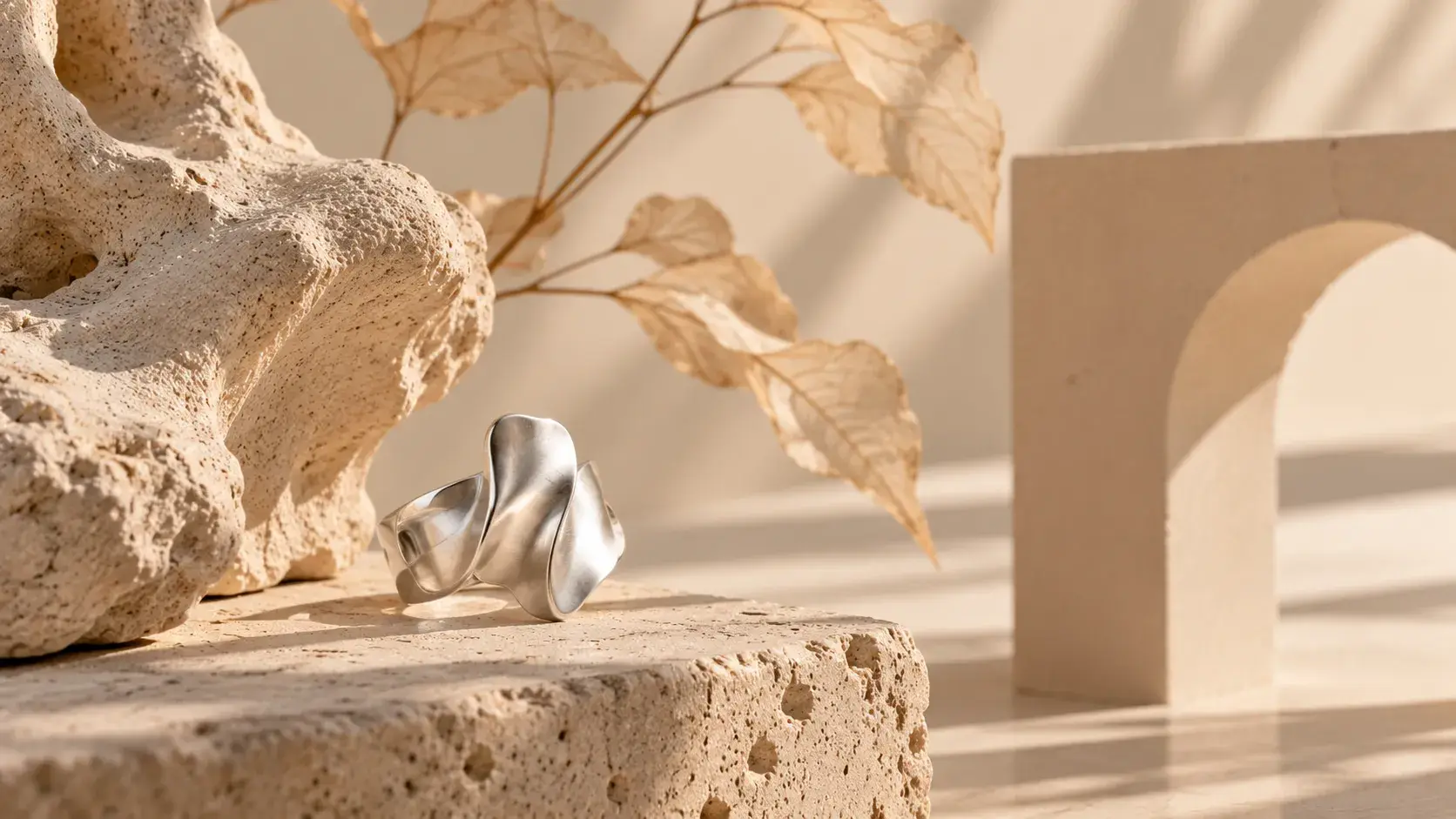
Nature and Architecture in Contemporary Jewelry Design explores how the natural world and the built environment inspire distinctive shapes, structures, and materials in modern jewelry. From the flowing curves of leaves and ocean waves to the clean lines of buildings and geometric facades, these influences offer designers new ways to balance artistic expression with wearable form.
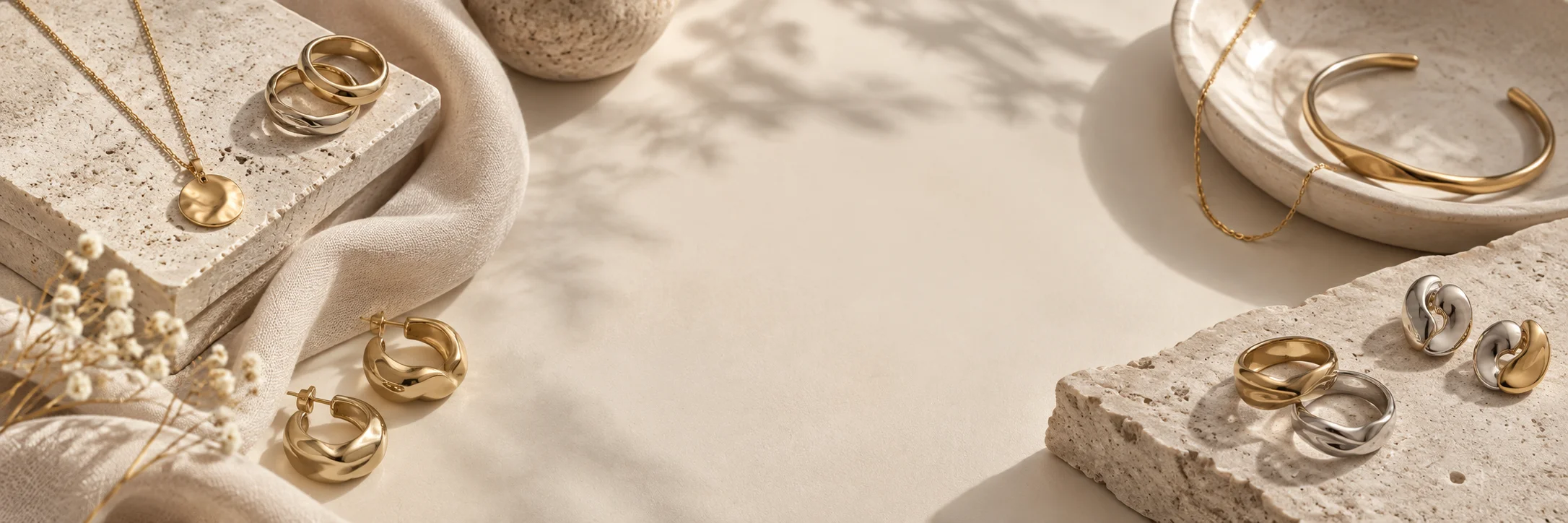
At Mahshid Gallery, contemporary gold and silver jewelry draws inspiration from nature, movement, and simplicity, reflecting the relationship between material, shape, and emotion.
Nature and Architecture in Contemporary Jewelry Design
Nature has long provided artists and designers with an extensive source of inspiration. Its forms are rarely perfectly uniform, yet they often display a remarkable sense of balance. The curves of a shell, the branching structure of a tree, and the layered surfaces of a stone can all suggest new directions for jewelry design.
Organic Shapes and Flowing Lines
Organic shapes are inspired by forms found in the natural world. Unlike strict geometric patterns, they often feature irregular contours, asymmetry, and flowing lines. These qualities can make a jewelry piece feel dynamic and individual.
A ring might follow the curve of a growing branch, while a pendant could echo the outline of a pebble shaped by water. Earrings may use asymmetrical forms to create movement around the face. Rather than copying nature literally, designers can simplify these references into abstract shapes that feel contemporary.
This approach allows jewelry to express the character of a natural form while maintaining a clear design identity.
Texture and Natural Surfaces
Natural materials often reveal complex surfaces. Stone may appear rough or layered, leaves can display delicate veins, and water creates shifting patterns of light. These details can inspire surface treatments and textures in metal jewelry.
A brushed silver finish, for example, can create a softer appearance than a highly polished surface. Subtle irregularities may add depth, while smooth curves can evoke the gentle contours of natural objects.
In Nature and Architecture in Contemporary Jewelry Design, texture helps connect visual inspiration with the physical qualities of a finished piece. It can also influence how light moves across the jewelry, creating contrasts between bright highlights and shaded areas.
Movement and Asymmetry
Nature is constantly changing. Branches bend, waves rise and fall, and petals unfold in different directions. Designers can translate this sense of movement into shapes that appear fluid rather than static.
Asymmetry is particularly useful for expressing organic inspiration. A pair of earrings does not always need to be identical to feel balanced. Two complementary forms can create harmony through their differences.
The challenge is to preserve a sense of intention. Even when a design looks spontaneous, its proportions, weight, and construction require careful consideration.
The Influence of Architecture on Jewelry Design
Architecture provides another powerful source of inspiration. Buildings bring together structure, geometry, proportion, and materials to create forms that are both functional and visually meaningful. These same principles can be applied to jewelry at a much smaller scale.
Geometric Shapes and Clean Lines
Architectural design often uses circles, squares, rectangles, arches, and repeated linear elements. In jewelry, these shapes can create a strong visual identity.
A geometric pendant might feature a precise outline, while a ring could use intersecting planes to create depth. Earrings inspired by architectural facades may combine vertical lines with open spaces, producing a structured and modern appearance.
Clean lines can also complement minimalism. When unnecessary decoration is removed, the proportions and relationships between shapes become more noticeable.
Structure, Balance, and Proportion
Architecture must account for the relationship between individual components and the whole structure. Jewelry designers face a similar challenge: each element needs to work with the rest of the piece.
The thickness of a ring, the placement of an opening, and the size of a pendant all affect its overall balance. A design may look striking in a sketch but require adjustments to remain comfortable and practical when worn.
Architectural thinking encourages designers to consider how a piece is constructed, not only how it appears. This can lead to jewelry that feels visually strong while remaining carefully balanced.
Negative Space and Minimalism
Negative space is the area surrounding or separating solid forms. In architecture, open spaces, windows, and gaps can define the character of a building. In jewelry, these spaces can be equally important.
An open ring or an abstract pendant with a carefully shaped cutout may feel lighter and more expressive than a solid form. Negative space can also guide the viewer’s attention, helping a design appear intentional rather than crowded.
This principle works particularly well in contemporary jewelry, where a small number of carefully arranged elements can create a strong visual effect.
The Design Process: From Observation to Finished Jewelry
Creating jewelry inspired by nature and architecture usually involves several stages of exploration and refinement.
1. Research and Observation
Designers begin by observing shapes, structures, and surfaces. This may involve studying natural objects, architectural details, photographs, or drawings. Sketches help identify promising forms and reveal how different ideas might work together.
2. Developing the Concept
The initial observations are transformed into a clearer design direction. The designer decides which qualities matter most: a flowing contour, a repeated geometric pattern, a sense of movement, or a contrast between open and solid forms.
3. Refining Proportions and Materials
The concept is adjusted to suit the intended jewelry type. A design for a ring has different requirements from one for a necklace or pair of earrings. Material thickness, weight, fastening, and contact with the body all influence the final form.
4. Crafting and Finishing
The chosen techniques are used to shape and assemble the piece. Finishing then refines its surfaces and edges, helping the jewelry achieve the intended appearance. Careful inspection ensures that the piece is suitable for wear as well as visually coherent. At every stage, the design must balance creative intention with practical considerations.
Why These Influences Matter in Contemporary Jewelry
Nature and Architecture in Contemporary Jewelry Design reflects a broader interest in objects that combine artistic meaning with everyday function. Rather than treating jewelry solely as decoration, this approach places emphasis on the relationship between form, material, and the person wearing the piece.
Nature can bring softness, irregularity, and a sense of movement. Architecture can contribute clarity, structure, and geometric precision. Together, these influences offer a wide range of creative possibilities, from subtle minimalist pieces to bold sculptural designs.
For a contemporary brand such as Mahshid Gallery, this relationship connects naturally with an approach that values nature, movement, and simplicity. Jewelry can express these ideas through a carefully shaped curve, an unexpected proportion, or a thoughtful balance between solid metal and open space.
How to Style Nature-Inspired and Architectural Jewelry
The visual character of a piece can guide how it is styled. Jewelry with organic curves often pairs well with soft fabrics, natural textures, and understated outfits. Architectural pieces may complement clean silhouettes, structured clothing, and minimalist styling.
A single statement ring or pendant can become the focal point of an outfit. Alternatively, several smaller pieces can be combined when they share a related material, finish, or design language.
When mixing organic and geometric jewelry, look for a common element that connects the pieces. Similar metal tones, complementary proportions, or a shared emphasis on simplicity can create cohesion without making every item look identical.
Comfort remains important. Jewelry should suit the occasion, fit securely, and allow natural movement. The most effective styling choices allow the design to stand out while remaining part of the wearer’s personal expression.
Conclusion
Nature and architecture offer two complementary ways to explore form in contemporary jewelry. Organic shapes introduce movement, irregularity, and texture, while architectural principles contribute structure, proportion, and clarity. When these influences are thoughtfully combined, they create jewelry that feels expressive, balanced, and wearable.
From sculptural rings to distinctive necklaces and earrings, contemporary designs can translate the world around us into personal objects of art. By focusing on materials, craftsmanship, and the relationship between form and function, designers can create pieces that celebrate both natural beauty and architectural imagination.
FAQ
- How Does Nature Influence Contemporary Jewelry Design?
Nature inspires jewelry through organic shapes, flowing lines, textures, asymmetry, and patterns. Designers often interpret these qualities in abstract forms rather than copying natural objects directly.
- How Does Architecture Inspire Jewelry Designers?
Architecture contributes geometric shapes, clean lines, structural balance, repetition, and negative space. These principles help create jewelry with a precise, modern, and often minimalist appearance.
- Can Nature-Inspired and Architectural Elements Be Combined in One Piece?
Yes. Designers can combine organic curves with geometric structures, contrasting textures, or open forms. This creates a balance between natural irregularity and architectural precision.
- What Materials Are Commonly Used in Contemporary Jewelry Design?
Gold and silver are widely used because they can be shaped into many forms and finished in different ways. Depending on the concept, designers may also incorporate gemstones and other decorative materials.
- Is Nature-Inspired Jewelry Always Organic in Shape?
No. Nature-inspired jewelry can use geometric forms to interpret natural patterns, structures, or proportions. Inspiration from nature does not require a literal or irregular silhouette.
- How Can I Style Architectural Jewelry?
Architectural jewelry often works well with simple clothing and clean silhouettes. A distinctive ring, pendant, or pair of earrings can serve as a focal point, while complementary pieces can be layered for a more coordinated look.