
Blog
The Story of a Jewelry Design: From the First Idea to a Timeless Piece
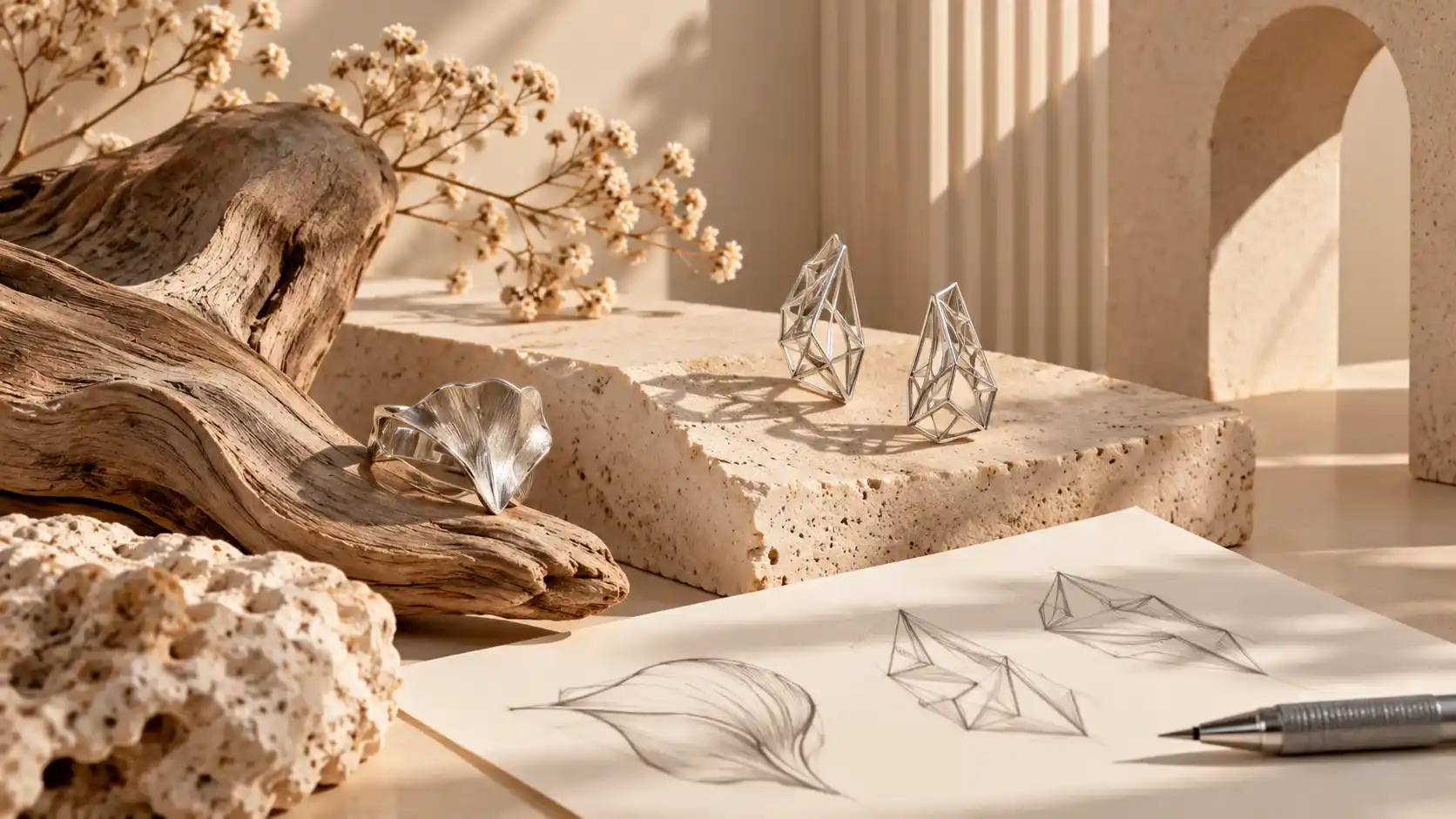
The Story of a Jewelry Design is the journey that transforms this initial inspiration into a finished object—one that combines creativity, material, craftsmanship, and personal meaning. At Mahshid Gallery, contemporary gold and silver jewelry draws inspiration from nature, movement, and the beauty of simplicity.
From sculptural rings and expressive earrings to thoughtfully shaped necklaces and bracelets, every design develops through a series of decisions. The choice of material, the balance of proportions, and the refinement of each curve all contribute to the final result.
Understanding this journey reveals why meaningful jewelry is about more than appearance: it is about the ideas, processes, and emotions carried within a carefully designed object.
The Story of a Jewelry Design
The beginning of a jewelry design is not always a sketch or a clearly defined plan. Often, it starts with observation. A designer may notice an unusual shape in nature, the relationship between light and shadow, or the way two forms fit together.
These small observations can become the starting point for a larger creative exploration. A curved line might inspire a ring, while the layered surface of a rock could suggest the structure of a pendant. Even everyday objects can reveal interesting proportions, textures, and patterns.
Inspiration from Nature and Everyday Life
Nature offers an endless range of shapes and movements. Leaves, shells, branches, water, and stones each have distinctive forms that can inspire new approaches to jewelry. Rather than copying these elements directly, designers often simplify or reinterpret them.
Architecture and sculpture provide another source of ideas. Geometric structures, open spaces, repeated lines, and balanced proportions can influence the shape of a piece. Personal experiences and memories may also affect the creative process, giving a design a meaning that goes beyond its physical appearance.
For Mahshid Gallery, the relationship between nature, architecture, movement, and the human body provides a foundation for exploring contemporary sculptural forms.
Turning an Abstract Idea into a Clear Concept
An initial idea can be exciting but difficult to translate into a practical design. The next step is to identify what makes the idea worth developing. Is it the shape, the movement, the texture, or the relationship between different elements?
By focusing on one or two defining characteristics, a designer can develop a clearer direction. This process helps prevent unnecessary details from distracting from the original concept.
The First Sketch: Giving an Idea a Shape
Sketching is one of the first opportunities to make an abstract idea visible. It allows a designer to explore proportions, silhouettes, and possible variations before working with physical materials.
The initial drawing does not need to be perfect. Several quick sketches can be more useful than one highly detailed illustration because they encourage experimentation. A curve can be adjusted, an opening enlarged, or two shapes combined in different ways.
Exploring Proportion and Balance
Proportion determines how the different parts of a piece relate to one another. A large central form may need a thinner supporting element, while a delicate design may benefit from a subtle change in thickness.
Balance is equally important. A piece does not always need to be symmetrical to feel harmonious. Asymmetrical earrings, sculptural rings, and abstract pendants can create visual balance through the thoughtful arrangement of shapes and space.
Considering How the Piece Will Be Worn
Jewelry is designed for the body, so a sketch must eventually account for comfort and movement. A ring needs to fit securely, earrings should have an appropriate weight, and a pendant should hang naturally.
These practical requirements do not limit creativity. Instead, they help transform an interesting concept into a design that can be enjoyed in everyday life.
Choosing Materials That Support the Design
Material selection is a defining stage in The Story of a Jewelry Design. Gold, silver, and gemstones each have different visual qualities, physical properties, and possibilities for shaping. The right choice depends on the concept and the intended character of the finished piece.
The Character of Gold and Silver
Gold can bring warmth and richness to a design, while silver often creates a cooler, more understated appearance. Both materials can support clean geometric shapes, flowing curves, and sculptural forms.
The surface finish also changes how a material looks. A polished surface reflects light, while a brushed or matte finish creates a softer effect. Texture can introduce contrast and make a simple shape feel more complex.
Mahshid Gallery works with contemporary gold and silver jewelry, with its website also highlighting sterling silver and carefully selected gems. These materials support designs in which form and detail play an important role.
The Role of Gemstones
Gemstones can introduce color, contrast, and a focal point. However, a design does not always need a stone to feel complete. In sculptural jewelry, the shape of the metal itself may provide the strongest visual interest.
When a gemstone is included, its size, color, and placement should complement the overall composition. A carefully chosen stone can enhance the concept without overwhelming the original form.
The Crafting Process of Jewelry Design
Once the concept and materials have been established, the design begins to take physical shape. This stage requires patience, technical skill, and attention to detail.
Forming the Main Shape
The forming stage transforms the selected material into the intended contours. Depending on the design, this may involve shaping metal, creating curves, refining edges, or developing individual components.
Small adjustments can have a significant impact. A slight change in angle may affect how a ring catches light, while a different curve can change the character of an earring.
Building the Individual Elements
Some designs consist of a single continuous form, while others bring several components together. Each element needs to work with the others in terms of proportion, structure, and appearance.
Connections and joints must be carefully considered, especially when a design includes moving parts or delicate shapes. The goal is to preserve the original concept while ensuring that the finished object is practical and durable.
Refining and Finishing by Hand
Finishing gives the piece its final character. Surfaces are refined, edges are checked, and the chosen texture or polish is developed. This stage can reveal details that were less noticeable during the earlier stages of production.
The process described by Mahshid Gallery follows a similar progression: sketching, forming, building, and finishing before the final piece is ready to be worn. Each stage contributes to the transition from an initial idea to a completed object.
The Emotional Meaning behind a Jewelry Design
Jewelry can hold meaning beyond its materials or appearance. A piece may remind someone of a particular place, mark an important moment, or become part of a personal routine. Even a design created without a specific occasion in mind can develop emotional significance over time.
This is one reason thoughtful design matters. A distinctive shape, a comfortable fit, or a subtle detail can make a piece feel personal to the wearer.
What Makes Every Jewelry Design Unique?
Two pieces made from similar materials can communicate very different ideas. Their shapes, surface finishes, proportions, and construction methods give each one a distinct identity.
The designer’s interpretation is also important. A natural form may inspire a delicate, flowing piece in one design and a bold, architectural object in another. There is no single correct way to translate inspiration into jewelry.
The Story of a Jewelry Design is ultimately shaped by these individual decisions. Each stage adds something to the final result, from the first observation to the smallest finishing detail. The finished piece becomes a record of the creative process, expressed through material and form.
Conclusion
Every piece of jewelry carries a journey from inspiration to completion. Through observation, sketching, material selection, forming, and finishing, an initial idea becomes an object that can be worn and appreciated. The most successful designs bring these stages together with a clear sense of purpose, balancing artistic expression with comfort and craftsmanship.
FAQ
- What Is the Story Behind a Jewelry Design?
The story behind a jewelry design is the journey from the first inspiration to the finished piece. It includes the ideas, sketches, material choices, crafting techniques, and refinements that shape the final object.
- How Do Jewelry Designers Find Inspiration?
Designers may find inspiration in nature, architecture, sculpture, personal experiences, everyday objects, or the properties of a material. These references are often interpreted through shapes, textures, and proportions rather than copied directly.
- Why Is Sketching Important in Jewelry Design?
Sketching allows designers to explore different forms and proportions before working with materials. It helps clarify the concept, compare variations, and identify potential practical challenges early in the process.
- What Materials Are Used to Create Contemporary Jewelry?
Contemporary jewelry can be made from gold, silver, gemstones, and other materials, depending on the design. Mahshid Gallery highlights gold and silver jewelry, including sterling silver and carefully selected gems.
- How Does a Jewelry Design Become a Finished Piece?
The process generally involves developing an idea, sketching the design, selecting materials, forming the main shapes, assembling components, and refining the surfaces. The exact methods depend on the design and the materials used.
- What Makes a Jewelry Piece Timeless?
A timeless piece often combines thoughtful proportions, quality craftsmanship, suitable materials, and a clear design concept. Comfort and versatility can also help a piece remain part of someone’s personal style over many years.